When you buy something through one of the links on our site, we may earn an affiliate commission.
Struggling with writing blog posts? You're not alone. The 5 steps of the writing process can help turn your blank screen into a viral blog post.
Whether you're just looking to captivate readers or boost your income, this guide will help you map out how to get there.
We'll break down the writing process into simple, actionable steps, with tips to transform your writing woes into wows.
Haven't got time to write the perfect blog post?
Never fear, Jasper.ai is here. If you're looking for a little boost on your writing journey, take advantage of this powerful AI tool.
With its advanced algorithms, Jasper.ai assists in generating ideas, improving your content’s flow, and ensuring your writing is clear and engaging. Follow the 5 steps of the writing process with Jasper's help, and you'll be on to a winner.
Check out our full review of Jasper.ai to find out more about this amazing tool and how it can help you boost your blog or your business.
Contents
Step 1: Prewriting and Research

The prewriting stage is all about laying a strong foundation for your blog post. It involves brainstorming ideas, conducting research, and planning your content.
This is where you light the initial spark that will fuel the entire 5 steps of the writing process.
This first stage is basically two sub-steps that can happen in any order. Many writers come up with their topic first then research it, some writers like to research as a way of brainstorming topics. Either way is fine, it's a process, do what feels right.
Coming up with a Topic
Likely you've already got an idea of what topic you'll be writing about because you've already got a blog or an audience you're writing to.
If you don't already have a blog then head over to our guide to launching a new blog and then check out this list of blog topic ideas and first blog post examples.
Consider your target audience and their needs/preferences to narrow down your topic to a specific argument or question. Being specific will help manage your word count while also giving direction to your writing.
Doing Research and Gathering Information
The research phase depends on your writing goals. For the purposes of this article, I'm going to assume you're writing a blog post or some kind of Internet article. This means you will want to do keyword research in addition to any research relevant to your topic.
New to the world of keywords? It's not as complicated as it may seem, take a look at this breakdown of keyword strategies to help you come up with one that will work for your own blog. I also recommend reading this quick article on keyword research in order to learn more about niche keywords and low competition sentences.
Essentially, keyword planning will ensure that there are readers out there who want to read what you're going to write. Otherwise, what's the point of writing it?
Once you've got your keyword focus then you need to do some research into your topic. The more knowledgeable your writing, the more value you can offer your readers. This is key to growing your regular audience.
Step 2: Planning and Outlining

This stage of the writing process is about creating the structure for your final draft. Before you start to write sentences, you need a plan for what you want to cover and how you're going to cover it.
Creating an Outline for Your Content
Doing an outline is important whether you're writing a 200-word article or an entire book. It helps structure your content logically.
Break your post into sections, come up with your headings, and use bullet points or numbering to ensure a clear flow of information.
This outline will guide your writing and keep your content organized, so your final version will be easy to read.
Tips for Organizing Ideas
Brainstorming how you're going to organize your ideas can actually be the hardest stage of the writing process. You want your written work to have a logical flow while covering all your points and appealing to your target audience.
Try some of these methods for developing a clear outline:
- Mind mapping: to create a mind map, start with your main topic in the center and draw branches for subtopics, supporting points, and related ideas. This visual method helps organize thoughts and see connections between different parts of your post.
- Free writing: Set a timer for 10-15 minutes and write continuously about your topic without worrying about structure or grammar. This can help you generate ideas and identify key points to include in your outline.
- Question and answer: Write down questions related to your topic and then answer them. This can help you uncover different angles and ensure you address all relevant aspects of the subject in your outline.
- Storyboarding: Create a sequence of “scenes” or main points, each representing a section of your blog post. This method helps you visualize the flow of your content and ensure a logical progression from one point to the next.

Step 3: The Drafting Stage

The drafting phase is where we start actual writing. It's time to get your words down on paper (or your computer screen) without worrying about it being perfect.
First Draft: Getting Your Ideas Down
When you sit down to begin writing, work to expand each point in your outline. Don’t aim for perfection; this is a rough draft. The goal is just to get your ideas down. You can fine-tune your writing later in the process.
How to Ensure a Productive Drafting Stage
Embrace imperfection in your first draft. Allow yourself to be messy and make mistakes. Remember, the drafting process is just the beginning. Writing is an art form that gets refined over time.
- Set yourself specific writing goals
- Follow your outline (you put in the effort of creating one for a reason)
- Be consistent!
- Ignore perfectionism
Step 4: Revising and Redrafting

Revising and redrafting are crucial steps in the writing process. This stage is about refining your content to improve clarity, coherence, and overall quality.
Evaluating Your First Draft
Once you've finished your rough draft and left it for a little while, come back to it with a critic's eye. Evaluate it for larger issues such as argument structure and overall flow.
Pay close attention to the main ideas and how they are presented since this is what your readers will be doing.
This may also be the stage for you to be thinking about SEO. Check out these tips on SEO and blogging. There are also lots of tools for SEO content writing to help you take your writing to that next level.
Revising and Redrafting for Clarity and Coherence
During the revision stage of the 5 steps of the writing process, there are a few critical things to focus on:
- Clarity and Coherence: Ensure that your ideas are presented clearly and logically. Each paragraph should flow smoothly into the next, and your arguments should be easy to follow. Check for any confusing or ambiguous statements and refine them for better clarity.
- Content Relevance and Value: Assess whether each section of your blog post adds value and is relevant to your main topic. Don't be afraid to chop out side tangents—you can always turn them into separate posts! This is the time to consider your word count.
- Structural Consistency: Check that headings, subheadings, and bullet points are used appropriately and uniformly. This makes it easier for readers to skim through your article (which is what most online readers do).
- Voice and Tone: Here, you want to make sure that you're keeping to your "brand voice" and that you're using an appropriate tone depending on the subject of your writing.
- Evidence and Support: If you're going to include data, quotes, or references, make sure they are linked/cited. Overall, the more evidence you can provide in your article, the more credible you will be seen as and the more value you can offer your readers.
Step 5: The Editing Process
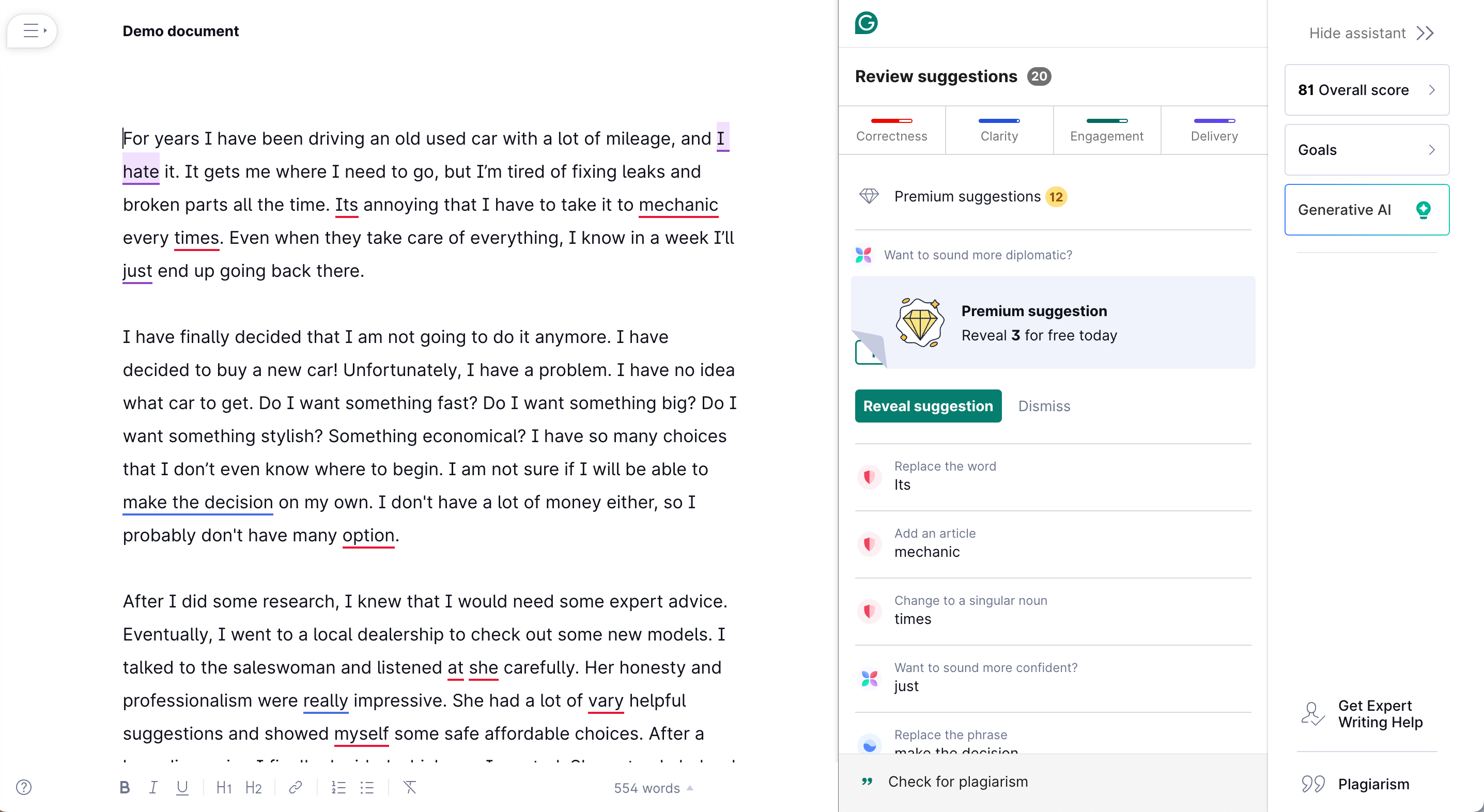
Editing and revising are two distinct stages, and it's important to understand the difference. While revising is part of the drafting process—where you make significant changes, deletions, or rewrites—editing focuses on correcting grammar, spelling, and punctuation errors.
Editing is done on your final draft after you've completed the revision process.
Ready to start editing? If you're not already using Grammarly to help you check for issues it's time to start. Catch grammar, spelling, and punctuation errors instantly, so your content is polished and professional.
Grammar, Clarity, and Consistency
When editing, focus on grammar, clarity, and consistency. This is your chance to ensure your text is error-free and easy to read. Check your sentence structure and maintain a consistent style and tone throughout your blog post.
Use editing tools to catch grammatical errors and refine your writing for better clarity. Remember, this stage is about polishing your work to make it shine.
Proofreading for Small Mistakes and Typos
Proofreading is the final step in the editing process. This is where you look for small mistakes like typos, spelling errors, and punctuation issues.
Use grammar checkers and read your text line by line to catch any remaining problems. Also, ensure your blog post is stylistically consistent and incorporates relevant keywords for SEO.
Quick Tips for the Editing Process:
- Take Breaks: After finishing your final draft, take a break before you start editing. Fresh eyes can spot errors more easily.
- Read Aloud: Reading your text out loud can help you catch awkward sentences and mistakes you might miss when reading silently.
- Use Tools: Tools to spell check or grammar check are great, but don’t rely on them completely. Manual checks are still essential.
- Check for Consistency: Ensure your tone, style, and formatting are consistent throughout your post. This includes headings, font sizes, and bullet points.
- Focus on Details: Pay close attention to small details like punctuation, capitalization, and spelling.
How Following the Proper Writing Process Can Boost Your Content
Following the 5 steps of the writing process can significantly improve the quality of your blog posts. Each stage, from prewriting and research to editing and proofreading, plays a vital role in creating engaging and professional content.
By applying these steps, you can attract more readers and grow your website. Remember, writing is a craft that improves with practice and dedication. Happy blogging!
Related Posts







Want to learn step-by-step how I built my Niche Site Empire up to a full-time income?
Yes! I Love to Learn
Learn How I Built My Niche Site Empire to a Full-time Income
- How to Pick the Right Keywords at the START, and avoid the losers
- How to Scale and Outsource 90% of the Work, Allowing Your Empire to GROW Without You
- How to Build a Site That Gets REAL TRAFFIC FROM GOOGLE (every. single. day.)
- Subscribe to the Niche Pursuits Newsletter delivered with value 3X per week
My top recommendations