When you buy something through one of the links on our site, we may earn an affiliate commission.
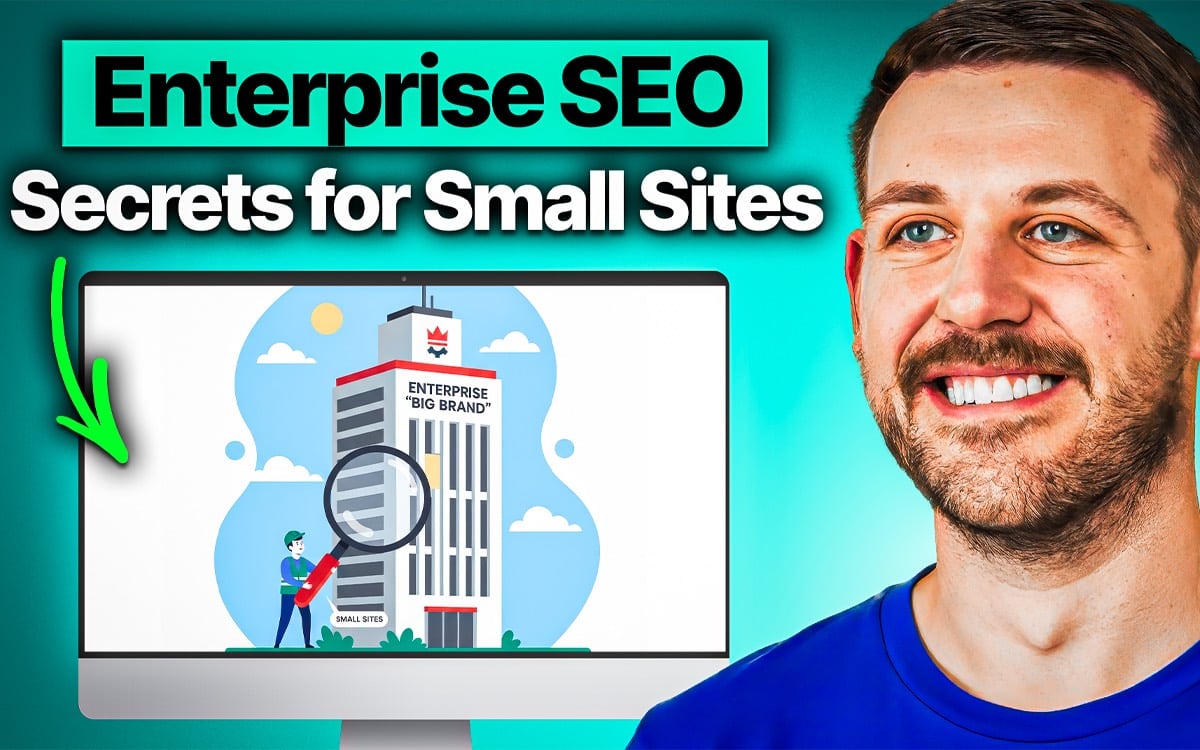
In this week’s episode of the Niche Pursuits podcast, Travis Tallent and I discuss what enterprise-level SEO really looks like in today’s AI-driven landscape. Travis is the Managing Director of SEO and CRO at Brainlabs, and he leads a 90-person team that works with some of the largest brands in the world.
While much of our conversation covers big-picture SEO strategy at scale, we also dig into concrete examples, especially during the second half of the interview, of what it takes to drive meaningful results in this ever-changing search environment. Let’s break down the key takeaways from our conversation, from orchestrating SEO across millions of pages to optimizing for AI search and LLMs like ChatGPT and Perplexity.
Watch the Full Episode
SEO at Scale: Beyond Random Acts of Optimization
Travis emphasized one of the biggest problems with SEO at any level: the reliance on “random acts of SEO". In his view, many brands, even enterprise ones, default to isolated actions like technical audits or one-off content briefs that don’t ladder up to a broader, orchestrated strategy. His solution is to move from optimization to orchestration.
Key points from Travis:
- 50% of his role is focused on identifying high-level SEO strategies for new clients.
- SEO works best when tightly aligned with product dev, developers, content creators, and CRO teams.
- Brands should avoid focusing only on audits or one-off tasks; they need a long-term, integrated plan.
He likened traditional SEO to a house, with tech SEO as the foundation, on-page SEO as the framing, and CRO as the staging. In contrast, today’s SEO is more like a city with multiple platforms (Google, TikTok, Reddit, YouTube, LinkedIn) feeding information into search and AI systems.
How to Prioritize When You Have 61 Million Pages
Travis gave a case study of a major client with 61 million pages and more than 20 million keyword rankings. Clearly, optimizing every page isn’t feasible. That’s where prioritization frameworks come in.
He introduced a framework called RISE:
- Radius to Reach: Size the prize by determining where non-brand keyword opportunities exist.
- Intent: Match content creation to what your audience is looking for and where they hang out.
- Scale: Decide how to create or update content efficiently using scoring systems like the RICE model.
- Execution: Get all stakeholders aligned with defined communication cadences and quarterly planning.
Highlights from this strategy:
- Focused on AI-related content, which was high-growth and low-competition.
- Discovered large blocks of underperforming content due to internal linking issues.
- Used scripting and automation to fix those at scale.
Winning With Content in an AI-First World
One of the most insightful parts of the interview was Travis’s perspective on content strategy in the era of AI search. While some SEOs are moving away from top-of-funnel content due to AI overviews cannibalizing clicks, Travis has a different view.
He believes upper funnel content is no longer just about traffic: it’s about visibility:
- Visibility in AI Overviews and large language models (LLMs).
- Building brand awareness early in the search journey.
- Establishing topical authority through expert-led, multi-platform content.
Approach to content creation at Brainlabs:
- Interviews with subject matter experts to inform long-form articles.
- Use of pull quotes, expert bylines, and multimedia formats.
- Focus on strategic discovery content that feeds long-term brand visibility.
According to Travis, 50% of all content online is now AI-generated, which opens a lane for real expertise to shine through well-crafted human-created content.
Measuring Success: Not Just Rankings Anymore
When it comes to reporting results, Travis takes a sophisticated, multi-layered approach. It’s not just about rankings or raw traffic anymore. For mature brands, success is tied to broader visibility and revenue impact.
Metrics that matter:
- Visibility across search engines and platforms (Google, YouTube, LinkedIn, Reddit, etc.).
- Growth in branded search volume, especially from AI-overview-driven queries.
- Referral traffic increases as a proxy for AI search performance.
- Lifetime value and revenue attribution wherever possible.

In the 12-month case study, he shared:
- The brand saw a 400% increase in SEO-optimized traffic.
- They gained 2,000 net-new page one keyword rankings.
- They became the most frequently cited brand in AI search results for their industry.
Optimizing for AI Search and LLMs
AI is reshaping how search results are delivered, and Travis is already ahead of the curve. He differentiates between Google’s AI Overviews and LLMs like ChatGPT or Perplexity and tailors optimization efforts accordingly.
The key differences:
- AI Overviews: 98% of citations come from page one rankings. Traditional SEO still rules.
- LLMs: Less sophisticated crawlers; can't handle JavaScript or dynamic rendering as well. They rely heavily on how content is structured and parsed.
Tactical tips:
- Don’t rely on client-side rendering for important data.
- Make your content easily parseable using short paragraphs, structured data, and clear headings.
- Prioritize static, accessible content that LLMs can crawl and understand without fail.
AI Conversations in the C-Suite
Travis shared that boardroom conversations are now centered around AI's broader implications. Executives are thinking well beyond SEO.
Topics on their minds:
- Shifting ad budgets toward content and multimedia that feeds AI models.
- Adapting products and services to remain relevant in an AI-enabled world.
- Using SEO data (especially from social platforms) to guide paid media strategy.
Interestingly, Travis is being pulled into more conversations about paid strategy than ever before, simply because SEO teams now have the data that brands need to compete effectively in AI-powered environments.
What to Do If You're Not Enterprise-Level Yet
For SEOs working with small to medium-sized sites, Travis recommends not trying to be everywhere at once. Instead, start with a deep understanding:
- Know where your audience hangs out and double down on that platform.
- Build visibility where competitors are weak.
- Only after establishing a foothold, expand into new platforms.
The “be everywhere” strategy works, but it must be approached in phases to be sustainable.
Final Thoughts
This episode provided a rare look into how SEO operates at the highest levels of scale and strategy. Travis Tallent didn’t just talk about AI in abstract terms; he walked us through how it’s changing content priorities, platform strategies, and even how enterprise brands define success.
Key takeaways:
- Enterprise SEO is about orchestration, not isolated tactics.
- Frameworks like RISE and RICE help prioritize and scale SEO effectively.
- AI search is already changing how content is discovered, and visibility is the new traffic.
- Brands need to play the long game by being present across multiple search platforms and formats.
Whether you’re managing a 100-page site or a 61 million-page behemoth, the principles remain the same: understand your audience, scale your efforts smartly, and prepare for an AI-dominated future. Stay tuned for more episodes that break down SEO in practice, not just in theory.
Links & Resources
- Learn more about Brainlabs
- Travis' LinkedIn
- Check out Travis Tallent's Newsletter
Related Posts






Want to learn step-by-step how I built my Niche Site Empire up to a full-time income?
Yes! I Love to Learn
Learn How I Built My Niche Site Empire to a Full-time Income
- How to Pick the Right Keywords at the START, and avoid the losers
- How to Scale and Outsource 90% of the Work, Allowing Your Empire to GROW Without You
- How to Build a Site That Gets REAL TRAFFIC FROM GOOGLE (every. single. day.)
- Subscribe to the Niche Pursuits Newsletter delivered with value 3X per week
My top recommendations